

Featured guide
What Is Server-Side Tracking? How It Works for Ecommerce
Learn what server-side tracking is, how it differs from browser tracking, what problems it can solve, and when adding a server-side layer is unnecessary.
Read guidePractical resources
Practical guides for server-side tracking, Conversion API, deduplication, attribution, and ecommerce measurement.
Meta CAPI
Google Ads
GA4
TikTok
Snapchat
Ecommerce
Deduplication
Featured guide
Learn what server-side tracking is, how it differs from browser tracking, what problems it can solve, and when adding a server-side layer is unnecessary.
Read guideA browser vs server event mismatch happens when the two paths disagree about the same business event — whether it exists, how many times it exists, what values it carries, or whether it was delivered successfully. The first step is not to compare two dashboard totals. It is to take one real source transaction and […]
Duplicate purchase events happen when one real order is represented more than once in the tracking system and those representations are treated as separate conversions. The clearest sign is not simply “the platform number looks high.” It is evidence that conversion counts or reported value exceed what the source transactions support, often with the same […]
When Meta sales don't match store revenue, the difference can come from tracking errors, attribution/reporting logic, or both. The store records real orders. Meta reports conversions according to the event data it receives and its own attribution/reporting rules. That means the two systems do not have to show identical numbers. The right diagnostic question is […]
Latest guides
Actionable content for teams that want cleaner data, stronger reports, and better platform optimization signals.
A conversion tracking audit is a structured review of the path between a real business conversion and the systems that are supposed to record it. The goal is not to prove that your tracking is broken. It is to find out whether important events are missing, duplicated, carrying the wrong data, failing between browser and […]
Read article →A conversion API integration should be treated as an event-delivery system, not a checkbox that says “server-side tracking is installed.” Before trusting it, an ecommerce team should define the conversion events that matter, validate values and identifiers, plan browser/server deduplication, test the full delivery path against real orders, and monitor the integration after launch. If […]
Read article →Server events missing from Meta usually means something broke before, during, or after delivery — not that Meta simply “lost” the conversion. The quickest way to diagnose it is to follow one real purchase from the source to the destination. First confirm the purchase event was actually created. Then inspect the payload, server-side processing, delivery […]
Read article →A conversion API gives a business a server-side way to send conversion events to a supported advertising or analytics platform. In practice, the flow is straightforward: a supported source creates a real event, the server-side layer validates and prepares that event, and then the event is sent to a verified platform API endpoint. The API […]
Read article →Managed server-side tracking vs DIY server-side GTM is really a decision about who owns the setup, monitoring, debugging, and ongoing maintenance. The short answer: DIY can make sense when your team has the technical capacity, wants deeper control, and is prepared to operate the stack continuously. A managed approach shifts more of the event logic, […]
Read article →Server-side tracking for ecommerce can improve how purchase and conversion data is collected, checked, deduplicated, and delivered across a tracking stack. The important limitation is just as clear: it cannot recover an event that never existed at the source, fix a bad campaign, or force your store and ad platforms to report identical revenue. Server-side […]
Read article →Server-side vs client-side tracking changes where event data is handled, how much depends on the browser, and where teams can control the flow. The short answer is simple: client-side tracking does most of its work in the user's browser or device, while server-side tracking adds a controlled server layer before data reaches supported destinations. The […]
Read article →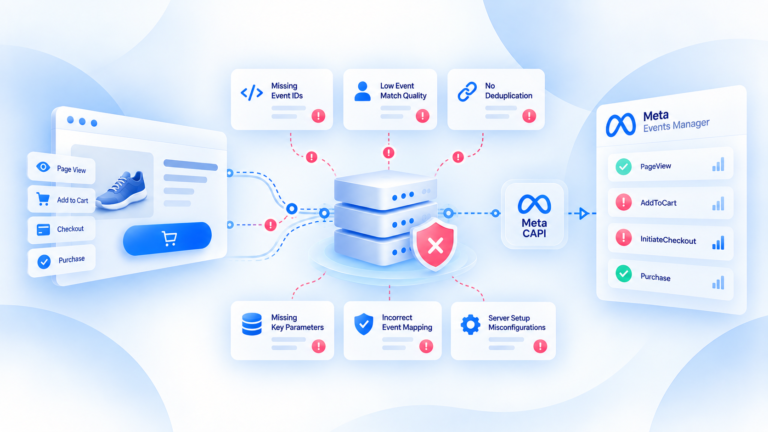
Avoid common setup errors that cause duplicated purchases, weak matching, and missing conversion data.
Read article →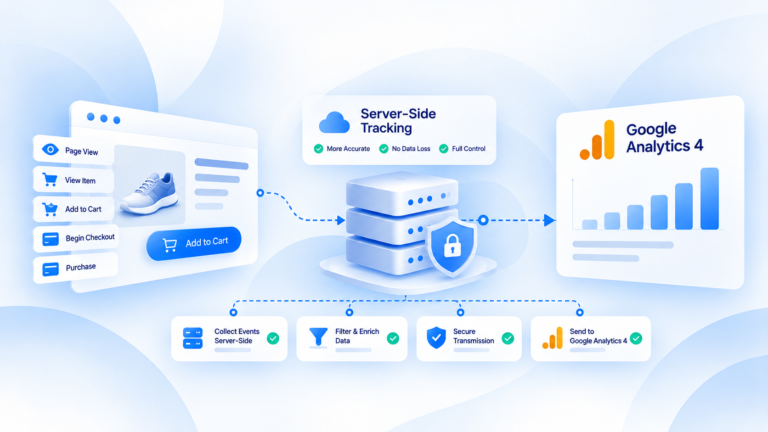
Send cleaner ecommerce events to GA4 and improve your analytics foundation for reporting and analysis.
Read article →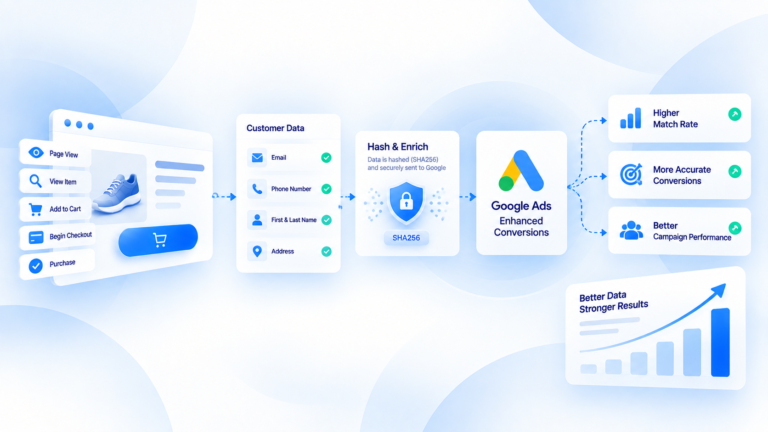
Learn how Google Enhanced Conversions uses hashed first-party data to improve conversion measurement.
Read article →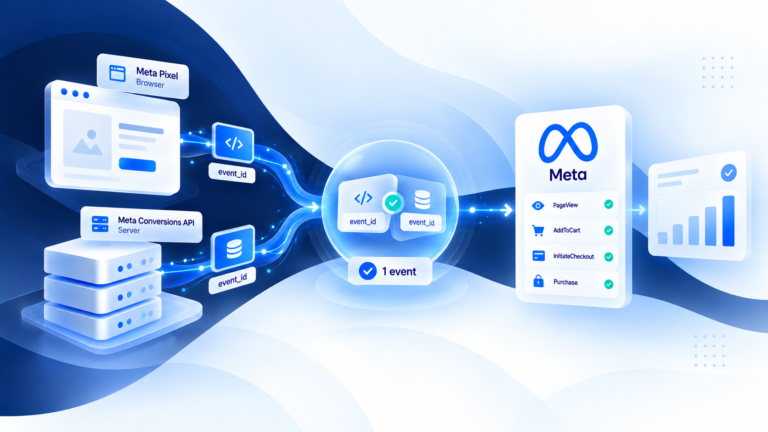
Learn the difference between Meta Pixel and Conversions API and how deduplication keeps reporting clean.
Read article →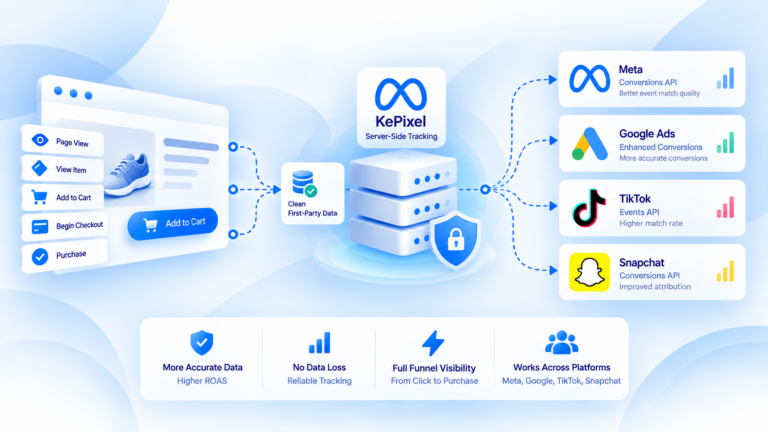
See how one clean event layer can support Meta CAPI, Google Enhanced Conversions, TikTok Events API, and Snapchat CAPI.
Read article →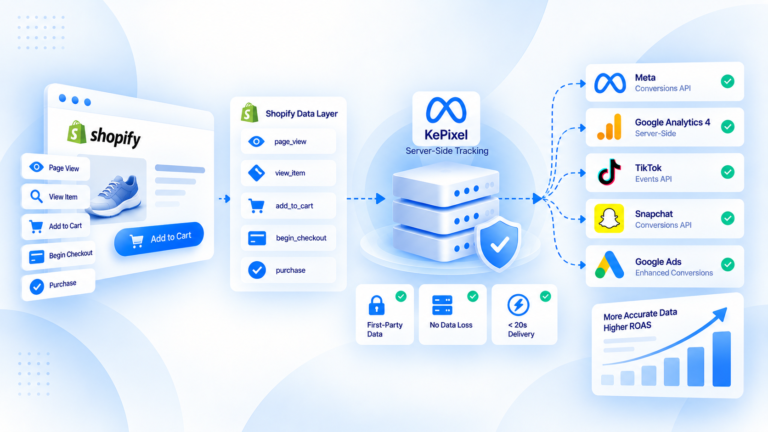
Plan a Shopify tracking setup using customer events, browser signals, server events, and destination routing.
Read article →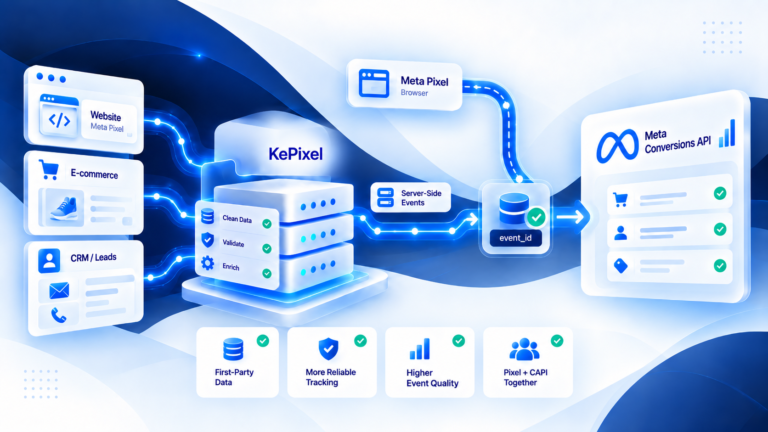
A simple explanation of Meta CAPI, how it works with Pixel, and why it improves event match quality.
Read article →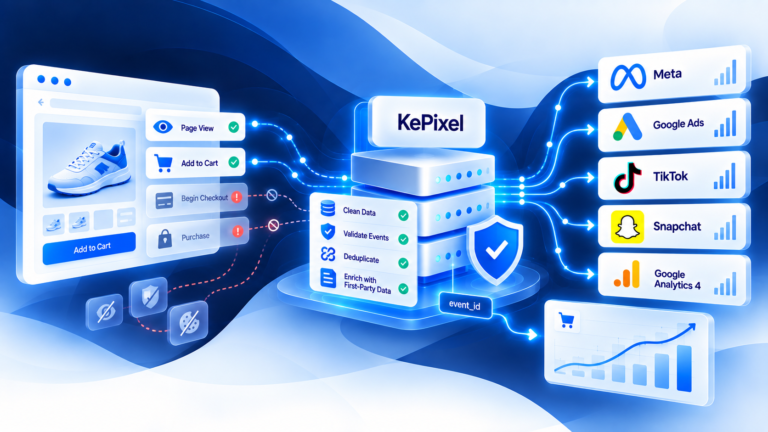
Understand how ecommerce brands use server-side data to recover missing purchases, carts, and checkout signals.
Read article →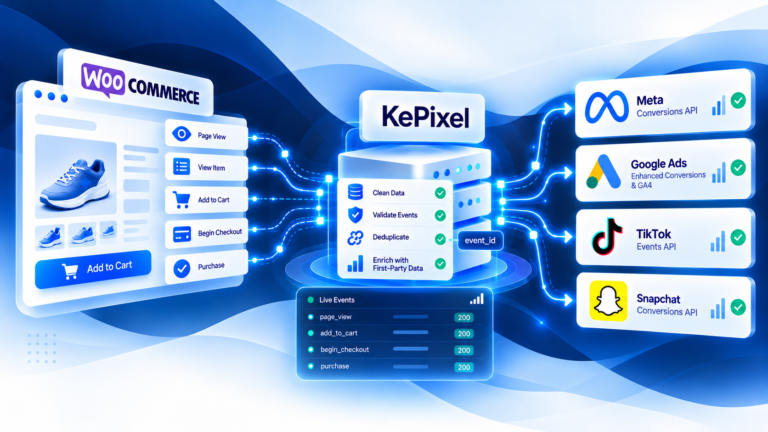
Build a better WooCommerce tracking foundation with server-side events, deduplication, and cleaner revenue data.
Read article →
Audit ecommerce conversion tracking across store orders, Meta, Google Ads and analytics. Check missing events, duplicates, IDs, values, consent and attribution.
Read article →
Learn why Meta Pixel and Conversions API can double-count the same purchase, how event deduplication works, and how to diagnose event ID problems.
Read article →
Learn what Meta Event Match Quality measures, why a CAPI setup can still score poorly, and how to diagnose identifiers, event coverage, deduplication and data quality.
Read article →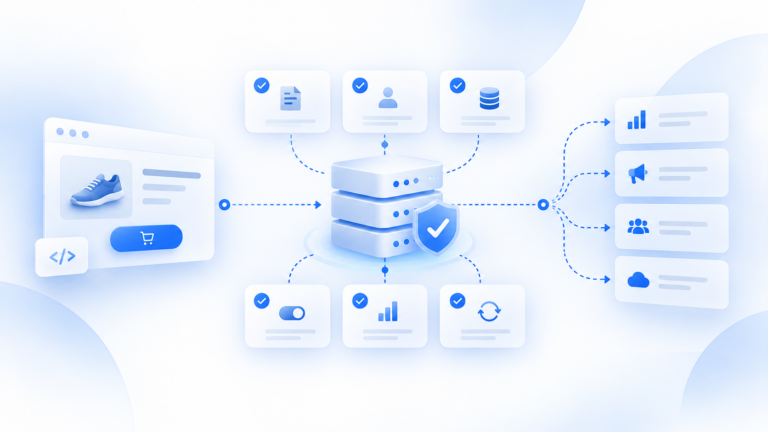
A practical checklist for planning server-side tracking: event ownership, consent, deduplication, identifiers, routing, testing, monitoring and rollback.
Read article →Learn and apply
Each guide is built to help you understand a real measurement problem and apply a cleaner tracking workflow without developer-heavy work.
FAQ
KePixel is designed to reduce unnecessary implementation complexity where current integrations support it.
A pixel sends browser events, while Conversion API sends server events. Using both with deduplication creates stronger measurement.
Platform support must be verified against the current KePixel support matrix before implementation.
Book a demo and we will review your sources, destinations, event quality, and implementation path.